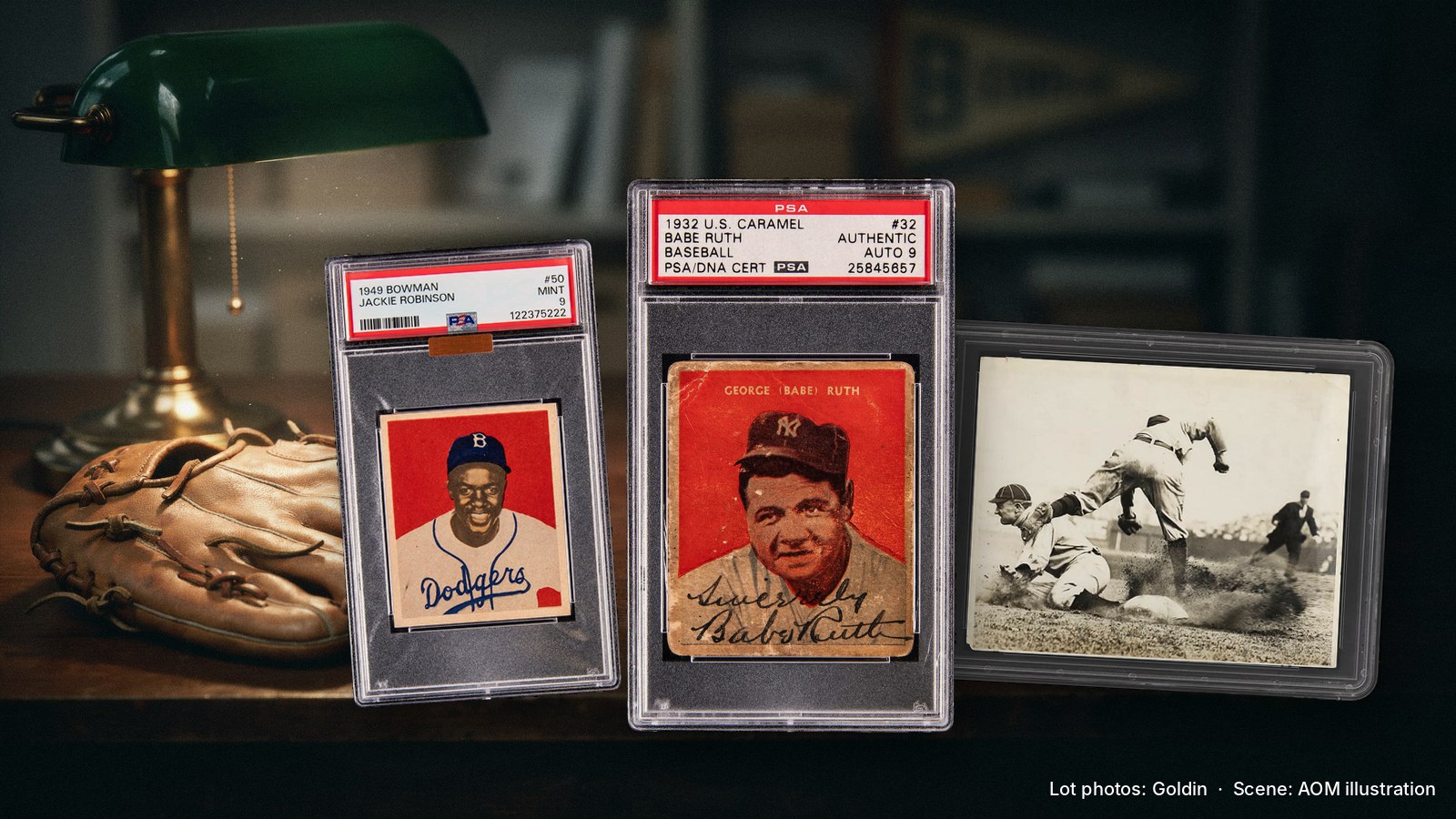
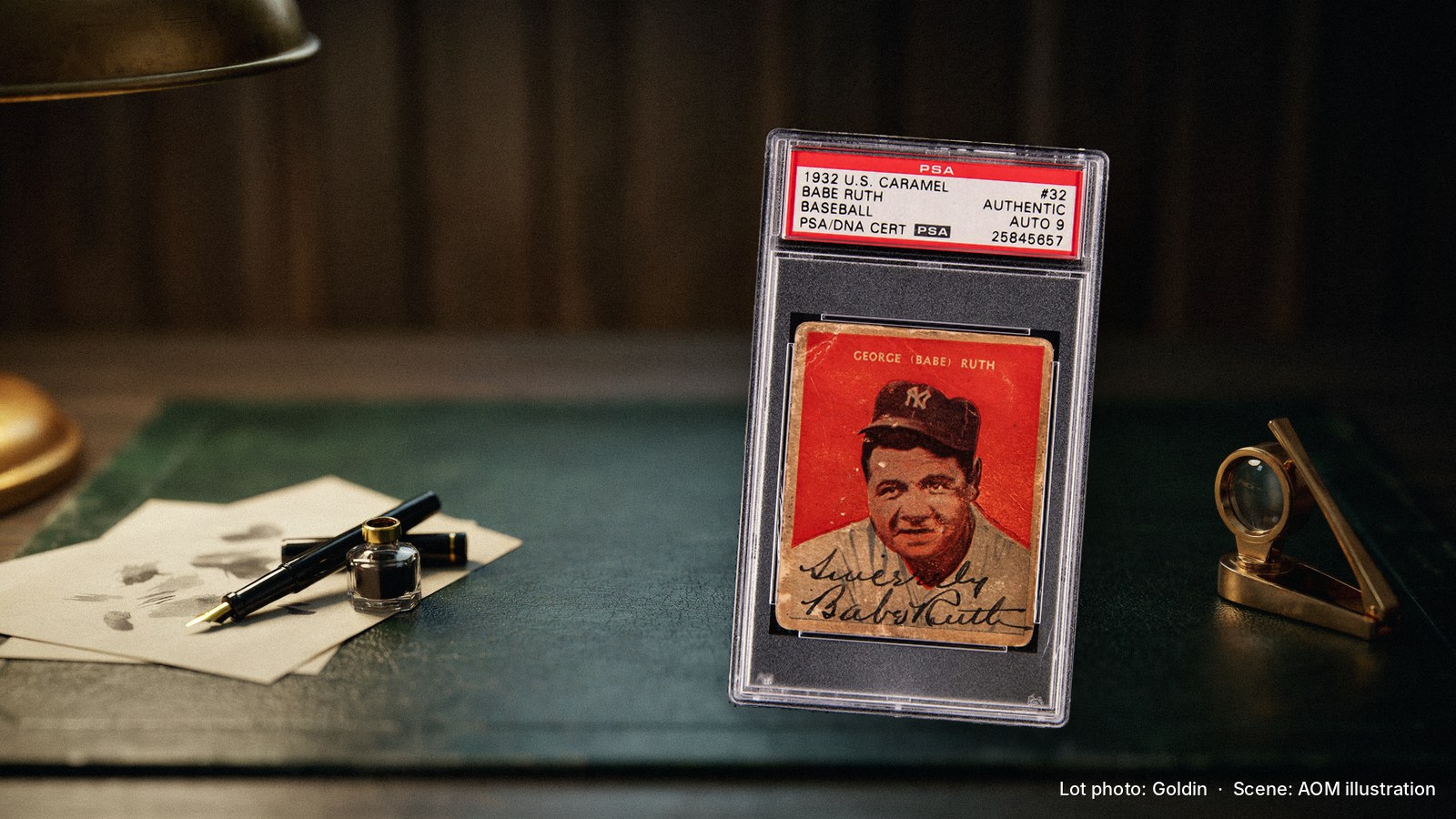
A signed 1932 U.S. Caramel Babe Ruth sold for $976,000 (including buyer's premium) at Goldin's Fall Vintage Elite, which closed overnight October 10–11, 2026, per Goldin's lot page and Sports Collectors Daily. The slab says Authentic and Auto 9 on the same label. Those two words are the whole story, and most price headlines skip them.
Here's what each half means, how to read a signed-card slab line by line, and what to check before you treat a near-seven-figure result as a comp for anything you own.
What the two halves mean
A signed card gets judged twice.
- The card. "Authentic" means PSA confirmed the card is genuine but did not give it a numeric 1–10 condition grade. Goldin's lot photo shows plenty of wear on this Ruth. Condition isn't what bidders paid for.
- The signature. PSA grades the autograph on its own 1–10 scale. Per PSA's autograph grading standards, a Mint 9 is "a superb condition autograph" with at most one minor flaw, such as a very light skip or a slight variance in boldness. A Gem Mint 10 is a virtually perfect autograph.
So "Authentic / Auto 9" tells you two things at once: the Ruth card is real, and the ink on it is a near-perfect example of his signature.
Why the autograph does the pricing work
- The population changes. Unsigned 1932 U.S. Caramel Ruths come up at auction in grades from poor to near-mint. Signed ones are a different population: Goldin bills this as the only known signed U.S. Caramel card across all 32 subjects in the set.
- The condition ceiling is already set. With no numeric card grade, there's no grade premium to chase. The market stops asking how clean the cardboard is and starts asking how good the ink is.
- A 9 is a strong result. PSA reserves a 9 for bold, clearly readable signatures with at most one minor flaw. On a decades-old fountain-pen signature, that matters.
- The inscription adds weight. Our read: "Sincerely – Babe Ruth" is a fuller, more deliberate specimen than a bare signature on the same card.
How to read a signed-card slab, line by line
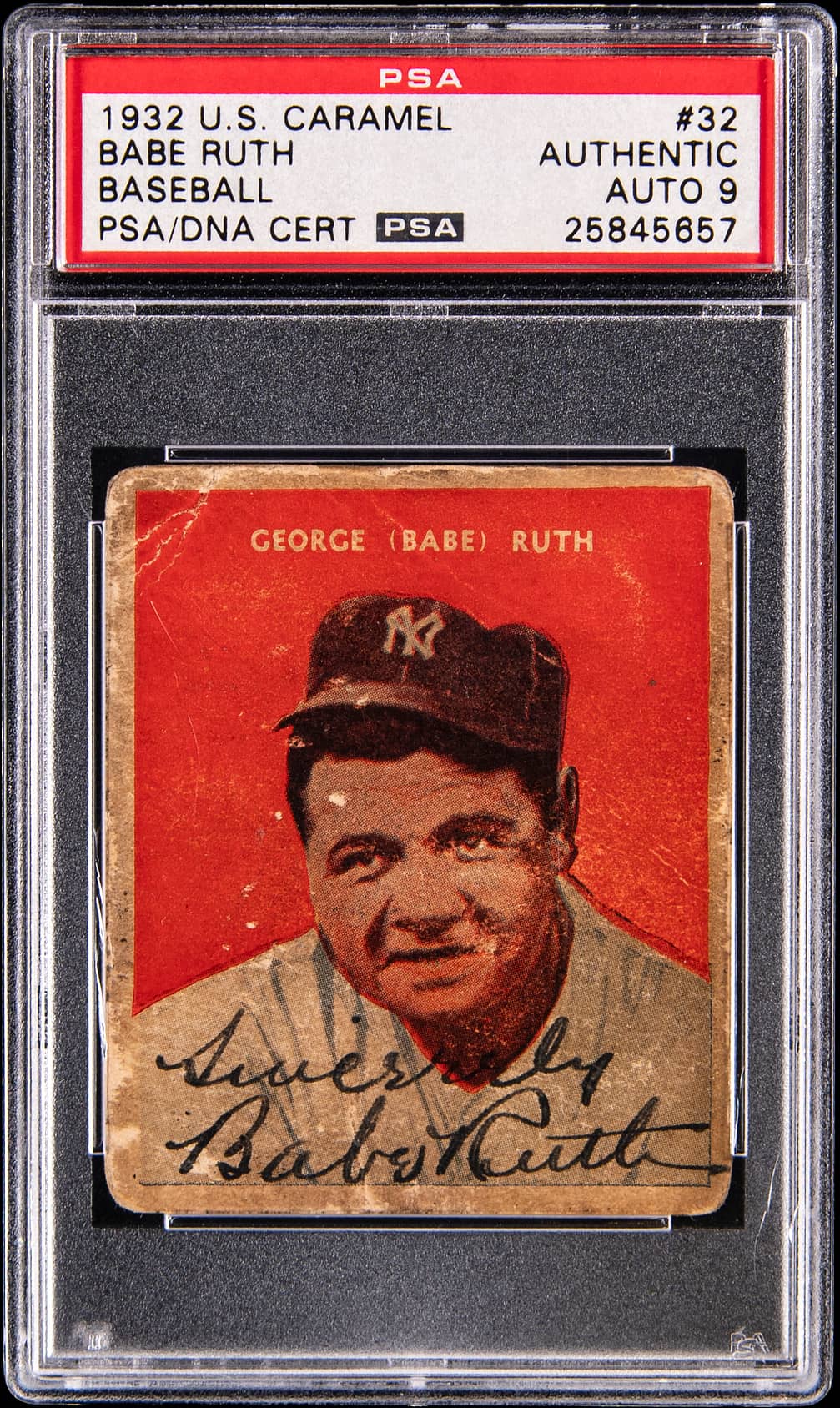
Here's the actual label on the $976,000 card, from Goldin's lot photo:
| Label line | What it says | What it tells you |
|---|---|---|
| 1932 U.S. CARAMEL · #32 | Year, issuer, card number | Ties the card to a known checklist |
| BABE RUTH · BASEBALL | Subject and sport | Who's on the card |
| AUTHENTIC | Card designation | Genuine card, no numeric condition grade |
| AUTO 9 | Autograph grade | PSA's 1–10 grade for the signature itself |
| PSA/DNA CERT | Service line | The signature went through PSA's autograph authentication |
| 25845657 | Cert number | Look it up to confirm the slab matches PSA's record |
If any line on a slab doesn't match the written lot description, stop and ask the seller.
What a signed card is not
- A sticker autograph is not ink on cardboard. Many modern autographs are signed on a sticker that's applied to the card. A signed vintage card like this Ruth has ink directly on the card surface. The two don't share price history.
- A cut signature is a different category. A signature clipped from a letter, check or album page and slabbed on its own is a "cut." Cuts have their own population and their own price band.
- Two "Authentic" cards can be far apart. The designation covers a wide range of cardboard. Study the photos and the description, because condition still drives eye appeal even without a number.
Verify before you buy
- Pull the cert. Look the number up on PSA (or use our PSA Verify tool). Confirm the player, set, card designation, auto grade and images all match the slab in hand.
- Read the full description. You want set, number, inscription versus plain signature, pen type if stated, and any notes on the autograph.
- Compare signed to signed. Unsigned sales of the same card are the wrong comp. Pull signed results for the same player at similar auto grades.
- Mind the buyer's premium. Goldin's $976,000 includes its premium. The winning bid was $800,000. Compare like with like.
- Save the lot URL and slab photos. A direct link to a comparable sale is worth more than any screenshot.
AOM signal: When a signed pre-war card makes a headline, the number is about the signature. Comp it against signed cards at similar auto grades, not unsigned cards of the same issue. "Authentic" tells you the card is real. "Auto 9" tells you what people are bidding on.
Check Current Listings
Age of Millennials may earn a commission from qualifying purchases made through these links, at no extra cost to you. Active listings show current asks, not sold prices.
Keep Exploring
- This Week in Record-Breaking Sales (Oct 5–11, 2026)
- Type I vintage sports photos: the record board
- PSA Verify: check a cert before you buy
- Gem Hunter map
Signal, not an appraisal. Sale figures from Goldin's lot page and Sports Collectors Daily; grading definitions from PSA. Verify live before buying or selling.