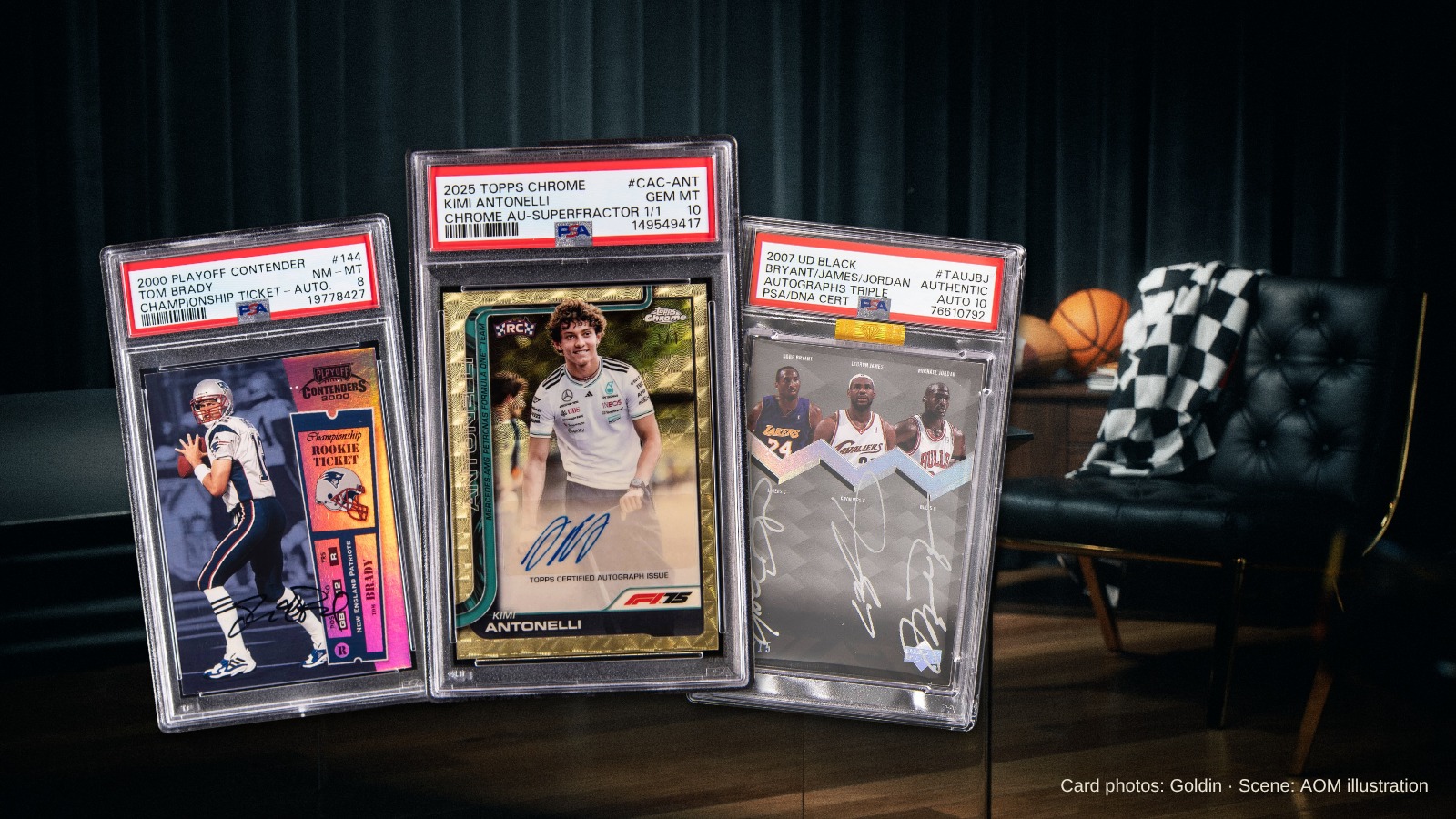
A gold, checkered Topps Chrome card with "1/1" stamped on it just sold for $878,400. The 2025 Topps Chrome F1 Chrome Autographs SuperFractor Kimi Antonelli, PSA 10, closed at Goldin on October 18 after 34 bids. If you've seen "SuperFractor" on a listing and wondered why it moves the price that much, this is the field guide. Signals, not appraisals.
What "SuperFractor" means on the slab
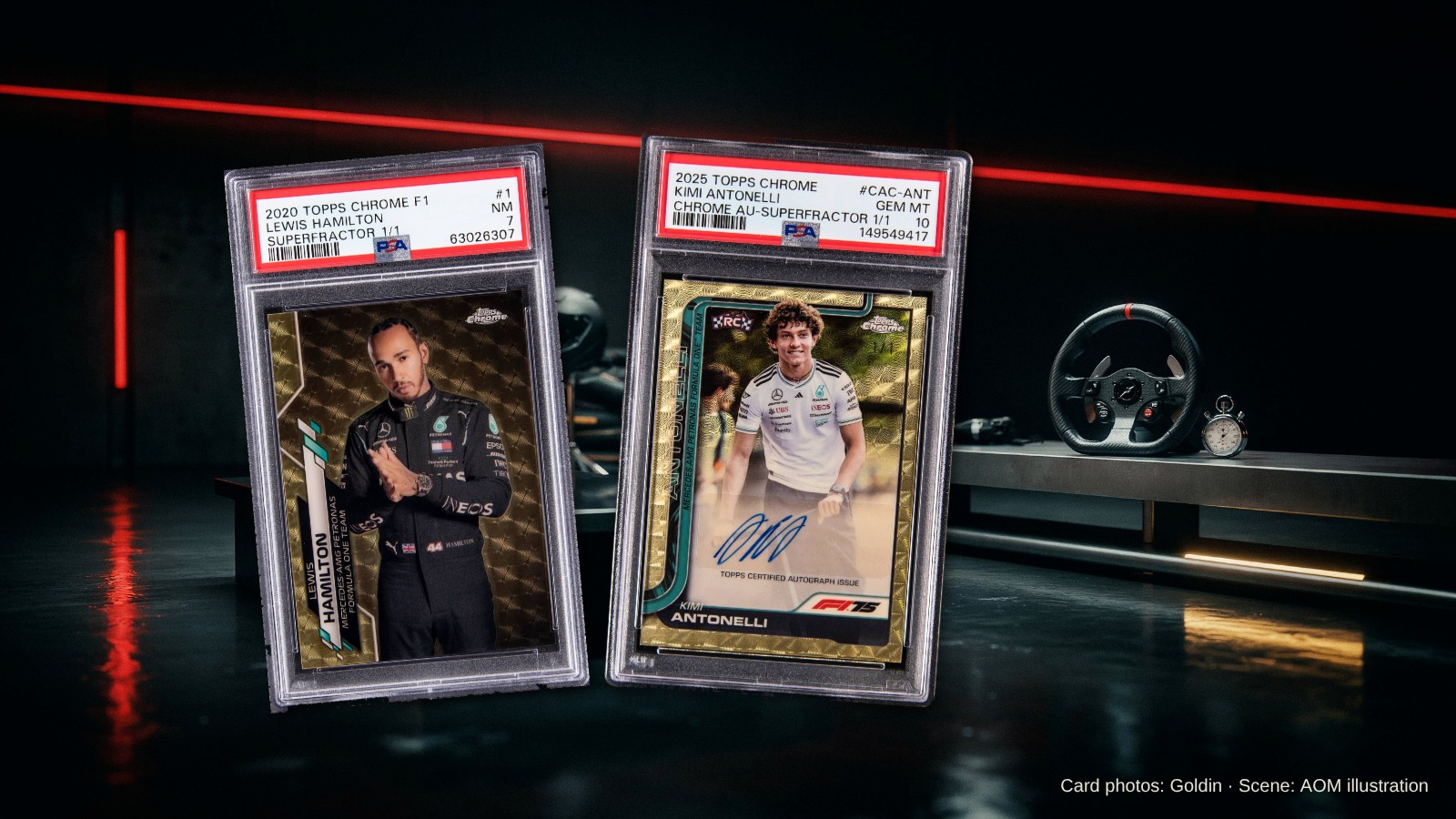
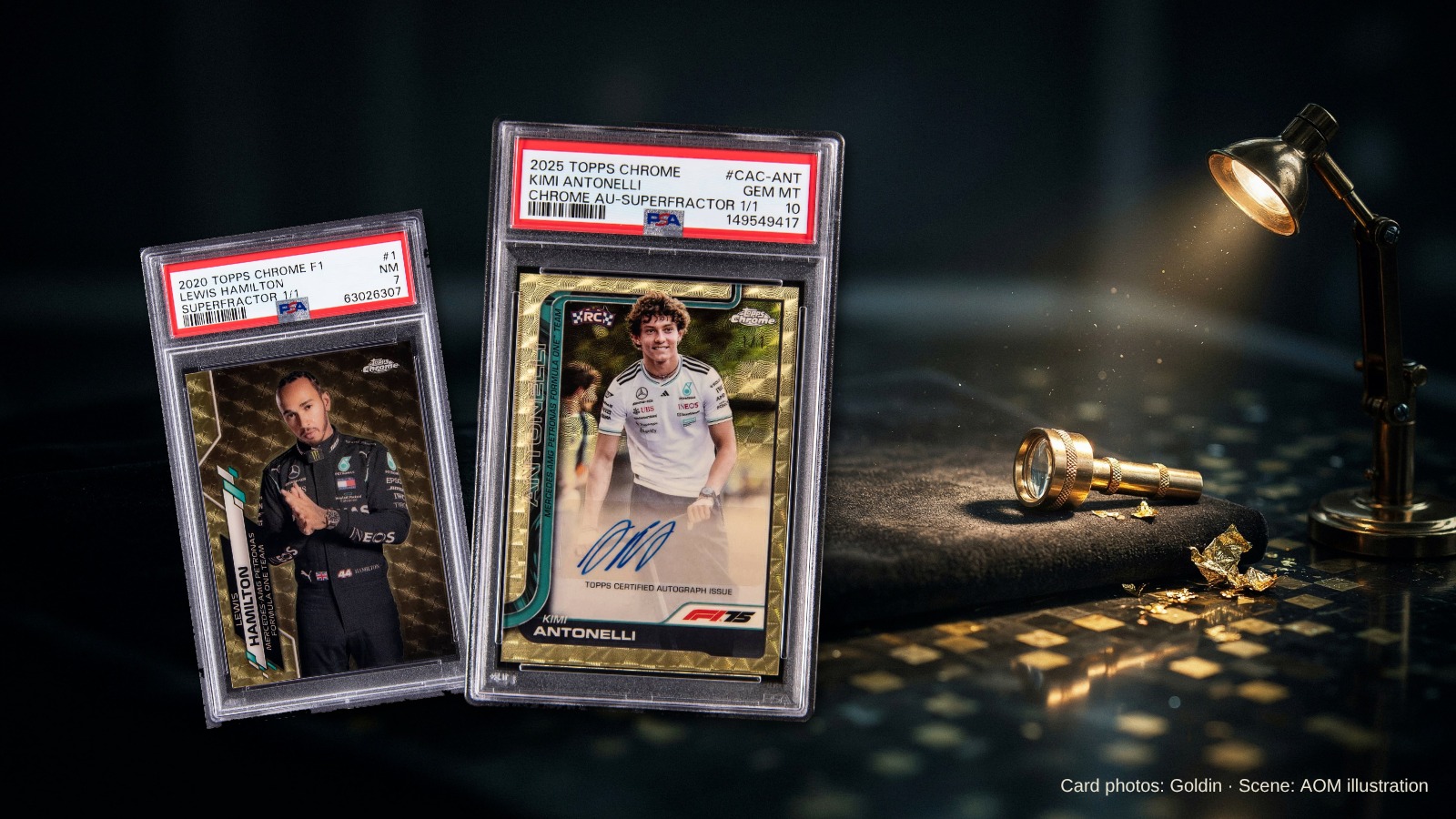
A SuperFractor is a Topps Chrome parallel with a gold, patterned refractor finish (you can see it on both slabs in this post) and a print run of one. Goldin's lot description calls it a "single-copy print run" with "Topps' patented SuperFractor design," and the card is serial-numbered "1/1." In plain terms, every player in a set can have exactly one, and nobody else will ever own a second copy of that card.
That's different from a short print or a low-numbered parallel like /5 or /10. Those are scarce. A 1/1 is singular.
How to read a SuperFractor slab, line by line
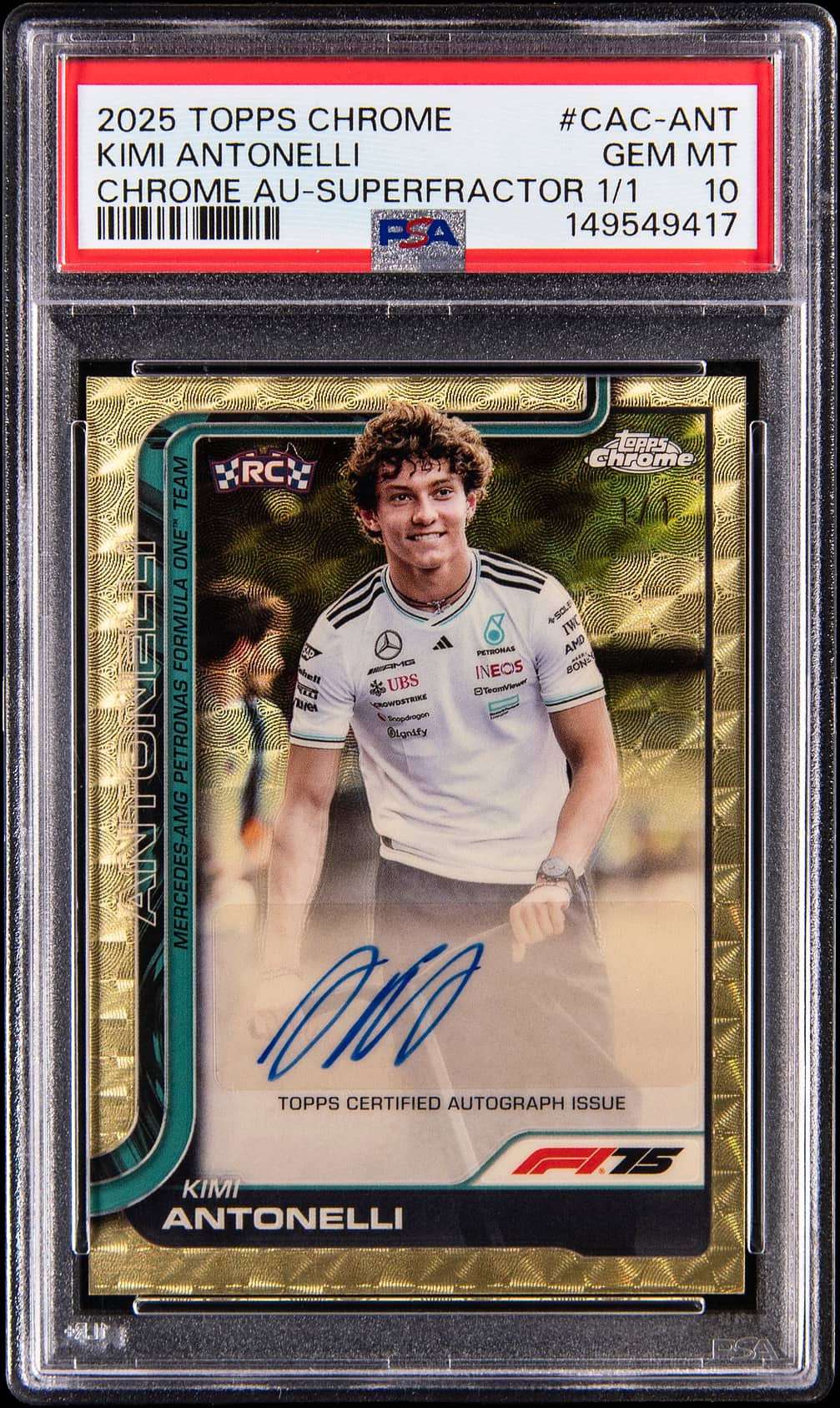
| Slab line (Antonelli example) | What it tells you |
|---|---|
| 2025 TOPPS CHROME · #CAC-ANT | Year, product and card number. "CAC" lines up with the Chrome Autographs insert named in the lot title. |
| KIMI ANTONELLI | The subject. |
| CHROME AU-SUPERFRACTOR 1/1 | "AU" = on-card autograph version; "SUPERFRACTOR 1/1" = the parallel and its print run. |
| GEM MT 10 | PSA's condition grade for the card. |
| 149549417 | The PSA cert. Run it on PSA Verify before you trust anything else on the listing. |
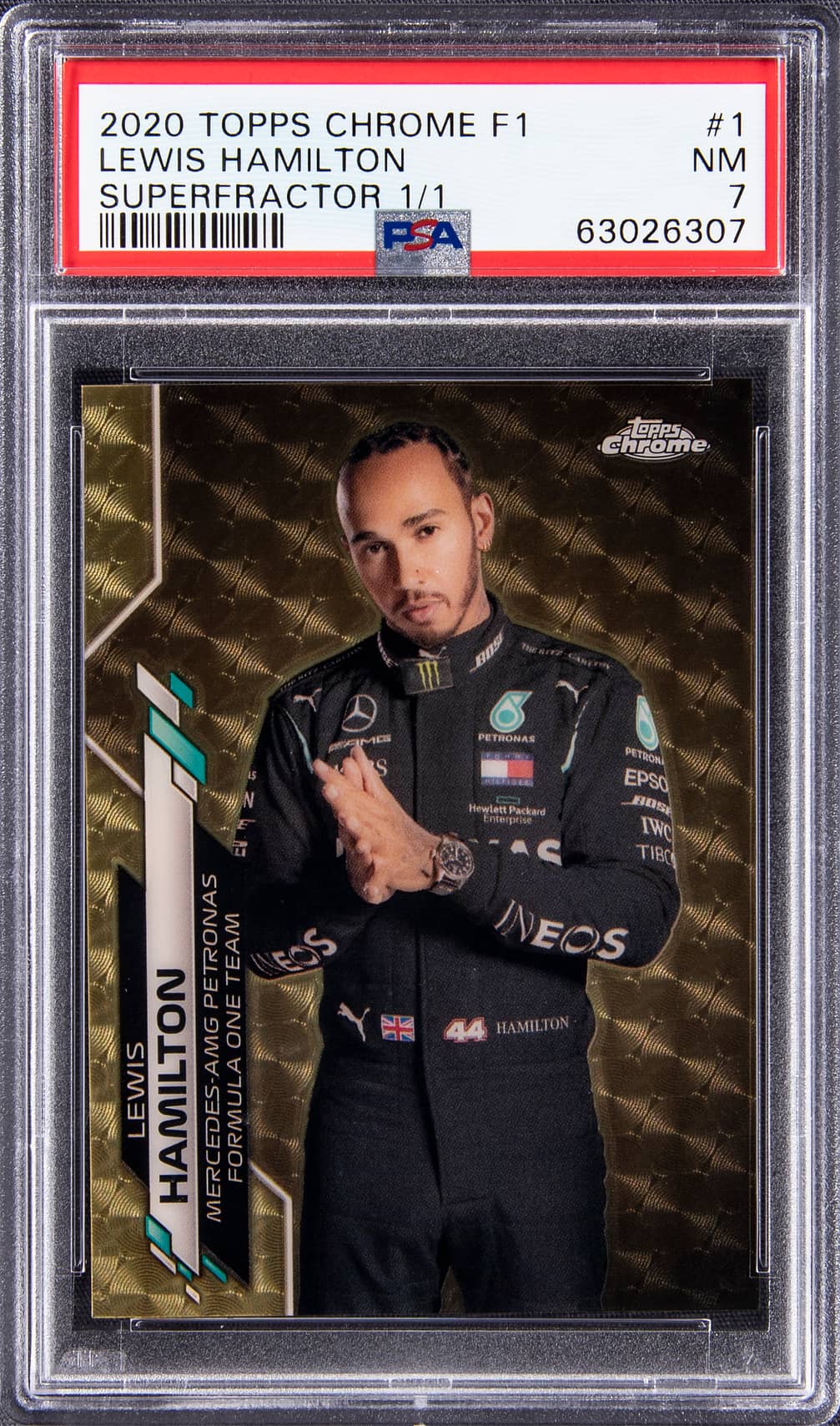
Compare a non-auto example: the 2020 Topps Chrome F1 SuperFractor #1 Lewis Hamilton label reads just "SUPERFRACTOR 1/1" with a PSA NM 7 grade. It still brought $900,000 at Goldin in April 2022.
Why a 1/1 has no comps (and what to use instead)
A comp is a recent sale of the same card in the same grade. A 1/1 can only ever have sold as itself, so the usual "last three sales" method doesn't exist. Collectors fall back on proxies:
- Earlier sales of the same 1/1, if it has traded before.
- Other 1/1s of the same player (other SuperFractors, other one-of-one parallels).
- The next tier down of the same card: the /5, /10 or /50 parallels.
- Live auction momentum. The Antonelli lot sat at $270,000 ($329,400 with premium) in early October, per Men's Journal, and closed at $878,400. A mid-auction bid is a current ask, not a result.
AOM signal: On a 1/1, the final hammer is the only hard number. Treat everything before it, including your own estimate, as a signal to research.
Auto vs. non-auto, and why grade still matters
The autograph version (AU) adds a second scarcity layer: one copy, signed. On the two SuperFractors in this post, the signed Antonelli in a PSA 10 and the unsigned Hamilton in a PSA 7 landed about $21,600 apart. Different drivers, different years, so it isn't a like-for-like comp. It does show that grade and autograph each carry weight even when the print run is one.
Verify before you buy: SuperFractor checklist
- Cert first. Look up the cert on PSA Verify and match the label text, grade and card number to the listing photos.
- Serial stamp. The card itself should carry the "1/1" serial. A label that says 1/1 on a card with no stamp is a red flag.
- Pattern check. Compare the gold pattern and border against known examples from the same product year.
- Autograph statement. For AU versions, the manufacturer's authenticity statement should be on the card (Goldin notes it on the Antonelli).
- Provenance. Ask where it's traded before. 1/1s tend to leave a public trail through auction houses.
- Comp honestly. Use the proxies above and say so. Don't treat a live bid or an asking price as a sold price.
Check Current Listings
Age of Millennials may earn a commission from qualifying purchases made through these links, at no extra cost to you. Active listings show current asks, not sold prices.
Keep Exploring
Signal, not an appraisal. Sale figures from Goldin lot pages (buyer's premium included) and Men's Journal; verify live before buying or selling.